22436
KLRG1 antibody
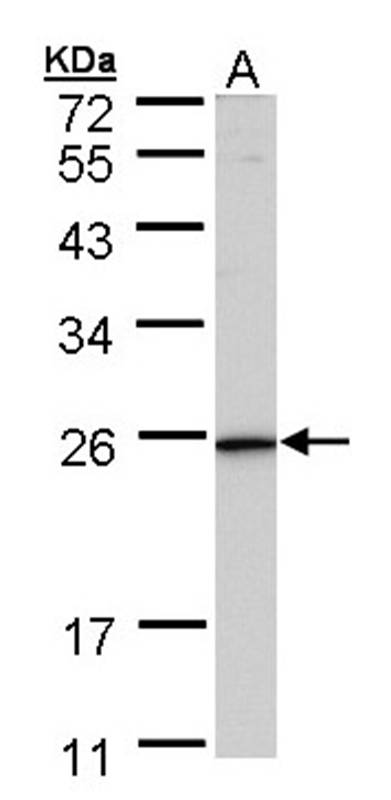
KLRG1 antibody (catalogue number 22436) is a rabbit-derived primary antibody validated for Western blot, reactive with Human samples. It targets Killer cell lectin-like receptor subfamily G member 1 (KLRG1): Plays an inhibitory role on natural killer (NK) cells and T-cell functions upon binding to their non-MHC ligands. Supplied as 100ul at ₪1,953.80; the final price is confirmed on your quote and the lot certificate of analysis ships with the order.
- Host / source
- Rabbit
- Reactivity
- Human
- Applications
- Western blot
- UniProt ID
- Q96E93
- Gene
- KLRG1
- Target organism
- Homo sapiens
- Catalogue number
- 22436
- Brand
- LABO Scientific
- Storage
- Store at -20°C for long term preservation (recommended). Store at 4°C for short term use.
Target background
Target: Killer cell lectin-like receptor subfamily G member 1 (KLRG1) · Homo sapiens
Plays an inhibitory role on natural killer (NK) cells and T-cell functions upon binding to their non-MHC ligands. May mediate missing self recognition by binding to a highly conserved site on classical cadherins, enabling it to monitor expression of E-cadherin/CDH1, N-cadherin/CDH2 and R-cadherin/CDH4 on target cells
Subcellular location: Cell membrane
Tissue specificity: Expressed specifically on natural killer (NK) cells and T-cells, mainly CD8 T-cells
Sequence length: 195 aa · 21831 Da
Protein background from UniProtKB, licensed under CC BY 4.0. Describes the target antigen, not this product.
Ordering in Israel
- Lead time
- Ships from the manufacturer to your lab in 8–14 business days; customs and cold chain handled by LABO Scientific.
- Pricing
- Quoted in ILS, excl. VAT. Add the item to your quote and we confirm the final price, usually the same business day.
- Storage
- Store at -20°C for long term preservation (recommended). Store at 4°C for short term use.
- Documents
- Lot certificate of analysis and manufacturer SDS are emailed with your order confirmation.
- Who we serve
- Universities, hospitals and biotech companies across Israel. Research use only — not for diagnostic or therapeutic use.
- Questions
- WhatsApp · +972-55-990-7576 · orders@labo.co.il